

Built for career changers moving into corporate instructional design, whether you're starting fresh or you've been trying it on your own.Enrollment for the November cohort closes Tuesday, November 17.
A self-paced instructional design certification program with weekly support, designed to help you build a portfolio that replaces experience so you can get your first instructional design job.
You learn instructional design fundamentals, the eLearning authoring tools used in the field and AI skills on a step-by-step path. Along the way, you create real, practical portfolio samples that look like the work instructional designers actually do, and experienced IDs review every one, as many rounds as it takes, until it reaches the level that replaces experience.
On average, about 6 months through AIDA (623 reported) and about 4 months to get hired once grads start applying (554 reported). It's designed around 15 hours a week, and you have up to 12 months to finish.
You're changing careers into instructional design. You might be a teacher, instructional coach or media specialist, a trainer or LMS admin, faculty or staff in higher ed, or coming from healthcare, marketing, tech or another field. Already working as an ID and haven't built eLearning in Storyline? It fits you too.
From the AIDA Outcomes Report, built from grads' own survey answers.
Since joining AIDA, grads have been hired into ID jobs at 760+ employers. Each company here hired at least one AIDA grad who changed careers into instructional design.


Networking is how you skip to the front of the line, so we teach you how to do it, inside AIDA and out. See how the network works
Maybe you've already made a few of them. Maybe you're just starting and want to skip the ones that cost people a year. Either way, here's what they look like.
None of these moves is a mistake. Each one makes sense with what you know, and each one covers part of the job. On their own, they rarely add up to a job offer.
Your experience brings some of the skills it takes to get hired and do this work well. That counts, and it gets you part of the way. The rest have to be learned, then shown in a portfolio. A resume can't show a skill you haven't had the chance to build yet.
I've been the hiring manager. What makes me keep reading is proof you can do the work.
Real samples, built in the tools we use, with good thinking behind every choice. AIDA is built to get you there, one reviewed piece at a time.
What you've built on your own counts. We evaluate it to see what you can use and what needs to be brought up to standard with our rubrics.
You use the rubrics to bring each piece up to that level, then submit it for feedback. The pieces you don't have yet, you build in AIDA, and they're reviewed the same way.
 Laura HallTeacher → Instructional Designer, NearmapAfter a year and a half of applying on her own
Ask people why they joined AIDA, and you hear the same things again and again.
 Kristen MaclinEducator (17 Years) → Supervisor, Training Legal Operations, Navy Federal Credit Union
 Monique WilliamsSenior Software Engineer → Learning Experience Designer, SweetRush
 Gina Hauth-MillerCorporate Trainer → Instructional Designer and Developer, TrainingPros
“Back when I was doing client work, I used to say I'd start teaching people how to get into instructional design when the work got lighter. It never got lighter. In 2019 I stopped waiting and started AIDA. The next year is going to go by either way. You get to decide whether you spend it building toward this.”
 Jill DavidianFounder of AIDA
A pay cut is one of the biggest worries people bring to this decision, so look at the numbers yourself. AIDA grads report a $76K average starting salary (347 reported) and a $43 an hour average contract rate (214 reported), and 74% earned more in their ID job than in the job they had before AIDA (232 reported).
Pick your state and slide in what you make now to see the entry-level estimate next to it.
All three can get you there. They cost very different things.
YouTube tutorials, free templates, Facebook groups. Some people pull it off. You're on your own deciding whether your sample reads as professional work or beginner work, and a year disappears fast while you guess.
Most master's programs focus on theory and are geared toward jobs in education, so if you're headed into higher ed instructional design, a master's fits. Corporate hiring managers want corporate-style samples and tool skills. Plenty of AIDA grads arrived with a master's already on the wall.
Think of it as trade school for instructional design.
M.S. Instructional Systems Technology · Indiana University
Jill Davidian has worked in instructional design since 2002. She started in higher education while earning her M.S. in Instructional Systems Technology at Indiana University, then spent ten years full-time in corporate instructional design at companies including Discover, Sysco, Vestas and BP. At BP she was an instructional design manager, leading ethical leadership and inclusive leadership programs for supervisors up through vice presidents across North and South America, and hiring for her team.
She read a lot of resumes and portfolio samples in that seat. She knows what makes a hiring manager stop scrolling, because she was the one scrolling.
She founded Learning Strategy & Design in 2014 and has designed training for clients including Chevron, Deloitte, Hilton and Lockheed Martin. She started AIDA in 2019 to teach career changers what she looked for when she was the one hiring.


AIDA runs on the Applied ID Portfolio Method, developed by Jill Davidian of Learning Strategy & Design. Five stages take you from how instructional designers think to your first ID job: Think, Build, Iterate, Prove and Land, with every sample reviewed until it's approved.
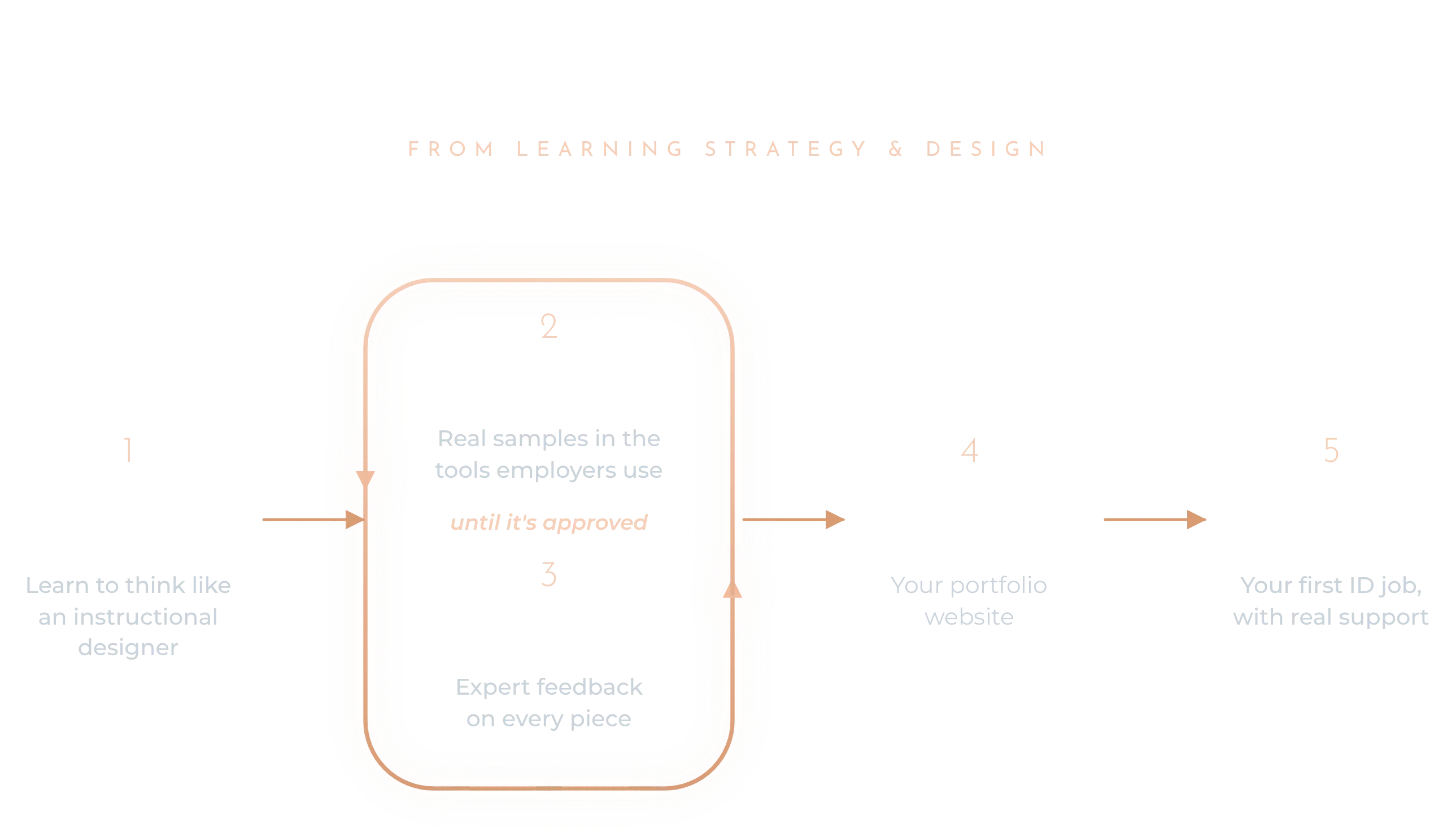
A lot of programs give you access to everything at once, with no step-by-step path. It's overwhelming to figure out what needs to happen first, and it's very hard to build on your skills when you get everything at once.
It's how you get to expert level in a short period of time without being overwhelmed, and it's how we get you to replace experience.
Many programs give you feedback and send you on your way. Nobody makes sure your sample is the quality it takes to get an instructional design job. In AIDA, a mentor reviews it against the rubric within 4 days, and we review your samples until they're approved, because your portfolio carries our name too.
Portfolio-grade means work that impresses a hiring manager. The rounds between draft one and the stamp are where "looks like a beginner made it" turns into "who did you hire to make this?"
The short version of each part, with its own page when you want the details.
Four AIDA portfolios from four different starting points. Click through any of them the way a hiring manager would.

 Amanda CrisostomoFormer teacherNow: Instructional Designer, Alaska Airlines→

 Kim HudsonFrom corporate trainingNow: Senior Instructional Designer, Technology, Raymond James→

 Benedetta KhouryFrom higher edNow: Learning Designer, Miami University→

 Michelle StanleyFrom health coachingNow: Instructional Designer, Sun Auto Tire & Service→
Most AIDA grads come from teaching, and plenty don't. AIDA is built for career changers, whatever you're changing from.
Pick the one that sounds like you for the full path from there.
Your resume is your past. Your portfolio is your future.
 Krysten SmithMiddle School Science Teacher (20 Years) → Technical Instructional Designer, HondaFrom teacher to ID →
L&D or training
Your resume shows the training you've run. Your portfolio shows the training you can build.
 Jennifer SchroederTechnical Trainer in Biotech → Senior Instructional Designer, PenumbraFrom L&D to ID →
Another corporate field
The training you built at work stays with your employer. You learn the process and the tools, and you build samples you can show, set in a field you already know.
 Carol BeachAccount Executive in Fashion → Lead Instructional Designer, ExperianFrom another field to ID →
Already an ID
Your years in the field count. A hiring manager weighs them alongside a current portfolio, and the portfolio is the piece to fix.
 Kristen ShermanReturning ID → Lead Instructional Designer, Schweitzer Engineering LaboratoriesIf you're already an ID →
Higher ed
Move from higher ed to corporate instructional design without another degree. What's new is building training from scratch, end to end, for a business problem.
 Chelsey BrownCommunity College Nursing Professor → Facilitation & Design Manager, HumanaFrom higher ed to ID →
Have or weighing a master's
For corporate jobs, it's a strong foundation. Your portfolio shows what you can do with it.
 Caroline HainSenior Instructional Designer, Dashe & ThomsonHad a master's and still no interviewsMaster's or AIDA →
Teachers ask me all the time whether a hiring manager will only ever see a teacher. Your portfolio is how you change what they see.
 Holli HurtMiddle School English Teacher → Instructional Designer, Sodexo
More than learning tools, I learned how to think like an instructional designer, how to analyze needs, make intentional design choices, and communicate my value to stakeholders.
 Mohua RoddamLeadership Development and Psychology → Learning Designer, Husch Blackwell
There is no way that I could have learned all the authoring tools, revamped my resume and LinkedIn profile, and created a portfolio without the support of the AIDA program, the mentors, the coaches, and the community.
 Casey JonesTeacher (16 Years) → Senior Instructional Designer, GM Financial
The portfolio assistance I received here made all the difference.
 Adriel HalliburtonTeacher (10 Years) → Instructional Designer, ISGFAlready had a master's in the field
What sets AIDA apart is the invaluable feedback from industry professionals. Your submitted work is reviewed and given feedback for improvements by those who know the ins and outs of instructional design in the real world.
 Tami ShepardCollege Dean, School of Health Sciences → Onboarding and Retention Lead, Trimedx
Even if you already have a MS in the field, this program helps because it gives you a better feel of how the work is actually done. Having this program greatly increased my confidence in my ID skills.
 June GavettTraining Specialist → Instructional Systems Specialist, United States Department of Defense
My favorite aspect was the coaching calls. [...] When I ran into issues that I couldn't figure out on my own, coaching calls and the facebook group were unbelievably helpful.
 Emily JohnsTeacher → Instructional Designer, Zendesk
Verified reviews on Trustpilot · 4.8/5 (140+ reviews)
It's for you once you've decided instructional design is the move, or you're close. You get a clear path, someone who's hired IDs telling you the truth about your work, and people beside you while you do it. Here's what it takes.
Spending this much on yourself is a big decision, especially if you've paid for a course or a degree before and it didn't get you hired. Here's exactly what you get, and what protects you if life gets in the way.
Enrollment closes Tuesday, November 17 at 11:59pm CT. The cohort starts Wednesday, November 18.
12 payments of $547 is $6,564 in all. Pay in full and save $567.
Been burned by another program? In AIDA, real people review every submission, you can talk to them live every week, and you don't move on until your work is ready.
Enrollment is closed right now and opens again in a few months. Get on the waitlist and I'll email you when it does.
 Marion CallahanInstructional Systems Design Manager, CPaT GlobalHas hired five AIDA gradsKristen ShermanReturning ID → Lead Instructional Designer, Schweitzer Engineering Laboratories
You can pause for up to 3 months. Your progress stays where it is, and your end date moves later by the length of the pause. Plan payments keep going on their regular schedule.
Request a refund within 72 hours of your purchase, minus a $300 processing fee, whether you paid in full or chose the payment plan.
A lot of companies pay for training that builds skills their teams can use, and plenty of that money goes unspent because nobody asks. If you're already on a training team, your company may pay for this. Get the employer kit to bring to your manager: a one-page business case, the full syllabus, every module outline and a request letter you can fill in.
Here's your kit. I also emailed you the link.
Download the employer kit (PDF)Live Saturday, November 21, plus the recording.
Use it any time you're active in AIDA, job search included. Bring your transition questions, get personalized feedback on your work, or talk through whatever you want.
What to say, how to say it, when to say it and when not to, plus how to breathe through the conversation and keep your nervous system calm.
We build AI code blocks that personalize your Rise samples and make them stand out to a hiring manager, live together, on top of what you learn in Advanced Rise. Bring your questions. AI does the coding. You do the review.
Rise and Storyline, with their AI features.
Build a sample in each, get mentor feedback on every one, and add more skills employers look for. You take them during Job Readiness.
Email info@learningstrategyanddesign.com and our team replies within one business day. Refund within 72 hours of purchase, minus a $300 processing fee, and you can pause your enrollment for up to 3 months. Read the terms.
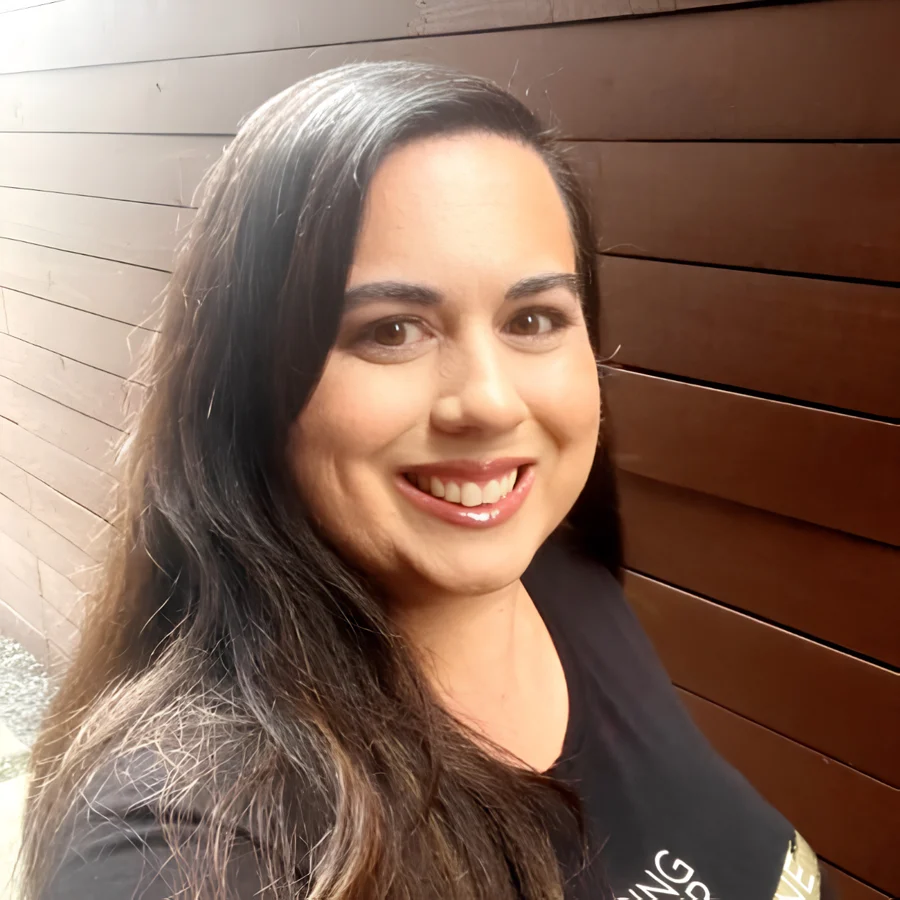
Jill Davidian is the founder of Learning Strategy & Design and creator of the Applied ID Portfolio Method. 20+ years in instructional design, including time as a hiring manager. 1,200+ AIDA graduates. More about Jill
Last updated: November 2026
The intersection of excited and scared is the perfect place to be. It's where you grow. Enrollment closes Tuesday, November 17 at 11:59pm CT, and the Articulate 360 bonus closes with it. We start Wednesday, November 18.